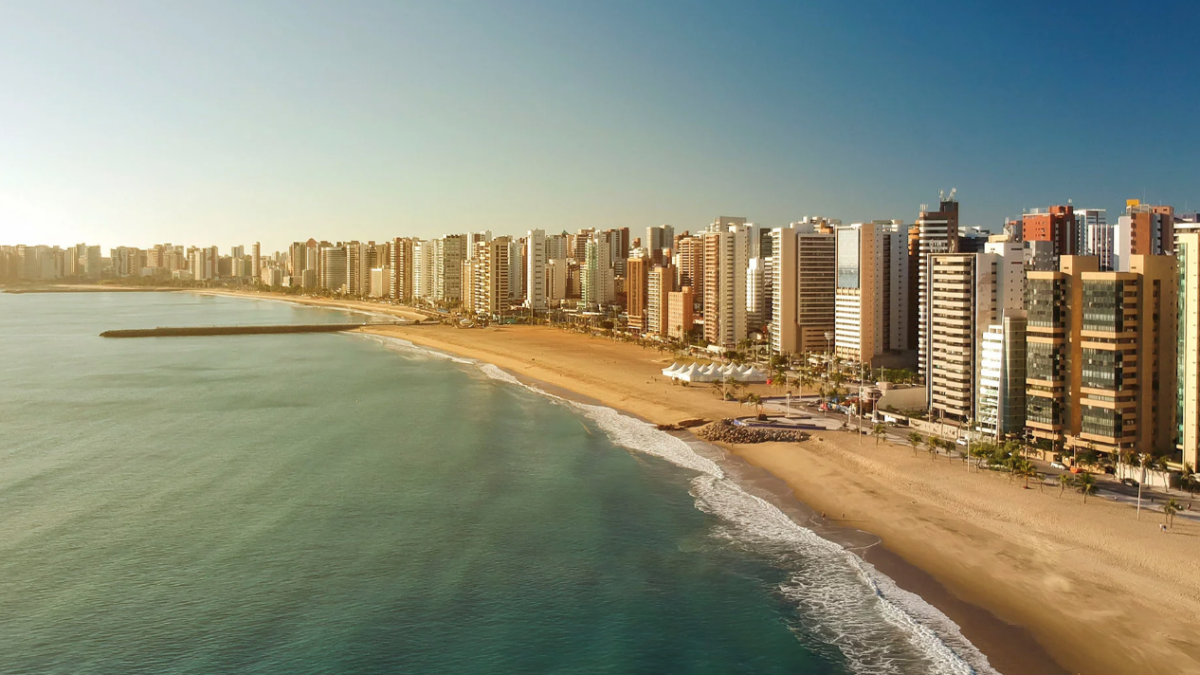
Buying a Beachfront Property in Brazil? Don’t Let “Terreno de Marinha” Scare You
Read More
If you are buying a beachfront property in Brazil, you may come across the term terreno de marinha. For a foreign buyer, this can sound alarming, especially when you also hear words such as SPU, laudêmio, foro and taxa de ocupação.
In reality, there is no reason to be automatically concerned. A property being located on land that forms part of the Patrimônio da União, meaning property belonging to the Federal Government, does not make the property irregular or unsafe to buy. It simply means that the land is subject to a specific federal property regime.
The system is administered by the Secretaria do Patrimônio da União, or SPU, which has a formal registration system, property records, valuations, payment controls and procedures for transfers and certificates. In other words, it is a structured and regulated system, not an informal arrangement.
What is a terreno de marinha?
A terreno de marinha is a category of federal land found along parts of Brazil’s coast and in some areas affected by tides. Its legal definition dates back to Decree Law No. 9.760/1946 and uses the historical average high tide line from 1831 as its reference point.
Despite the name, it has nothing to do with the Brazilian Navy. These properties belong to the União, the Federal Government, and are administered by the SPU.
Most importantly, a terreno de marinha does not simply mean “land next to the beach”. Whether a particular property falls under this regime is determined through the federal property system.
What is the SPU?
The SPU is the federal authority responsible for managing Brazil’s properties belonging to the Union.
It keeps records of these properties, determines relevant land values, manages payments and handles procedures involving transfers and regularisation. Properties can have an RIP number, which identifies them within the SPU system.
The SPU also provides online services where owners and professionals can obtain information, payment documents and certificates.
So, if you are buying a property subject to this regime, the fact that it is registered with the SPU is not a red flag. Quite the opposite: it means there is a formal federal record and an established procedure for dealing with the property.
Can you own a property if the land belongs to the Federal Government?
Yes.
Under Brazilian law, private individuals and companies can hold rights over federal land. One of the most common arrangements is aforamento, under which the Federal Government retains the direct ownership of the land while the private holder has the domínio útil, or useful domain.
There is also an occupation regime, which is legally different from aforamento.
For a buyer, the important point is simply to establish which regime applies to the particular property.
What are foro, taxa de ocupação and laudêmio?
These three terms are often confused.
Foro is an annual federal charge generally associated with properties under the aforamento regime. The current SPU rules establish it at 0.6% of the full domain value of the land, excluding improvements.
Taxa de ocupação is the annual charge associated with the occupation regime. The general rate is 2% of the full domain value of the land, excluding improvements, subject to the applicable rules.
Laudêmio is different. It is not an annual fee. It is generally payable when the relevant rights over federal land are transferred in an onerous transaction, such as a sale. Under Decree Law No. 2.398/1987, the rate is 5% of the updated full domain value of the land, excluding improvements.
This last point is particularly important for buyers. These amounts are not simply calculated as a percentage of the price of the apartment. The relevant calculation is based on the value of the land, excluding the buildings and improvements.
What does this mean when buying a beachfront apartment?
It means that a perfectly regular apartment in a coastal development can be located on land that forms part of the Patrimônio da União.
This is not unusual in coastal Brazil, particularly in places such as Fortaleza, Cumbuco and Aquiraz.
The important thing is to check the property’s matrícula, its SPU registration and RIP number where applicable, the legal regime, any outstanding charges and the documents required for the transfer.
Once these points are checked, there is nothing inherently problematic about the property being classified as federal land.
And what about the new law?
One important piece of legislation is Law No. 14.011/2020, which modernised several rules concerning the management, valuation, regularisation and disposal of federal properties.
It did not simply abolish terrenos de marinha, foro, taxa de ocupação or laudêmio. The federal property system continues to operate, with the SPU remaining responsible for its administration.
For buyers, the practical message is simple: Patrimônio da União does not mean that you are buying an irregular property. It means that the property is subject to an additional, well established federal layer of regulation.
As with any property purchase in Brazil, the key is proper due diligence and checking the specific property rather than being discouraged by the terminology.
For international buyers, understanding the SPU status before signing the purchase documents is an important part of a safe and transparent transaction.