Fortaleza: A Brazilian City Worth Getting to Know Beyond the Beaches
Read More
Fortaleza: A Brazilian City Worth Getting to Know Beyond the Beaches
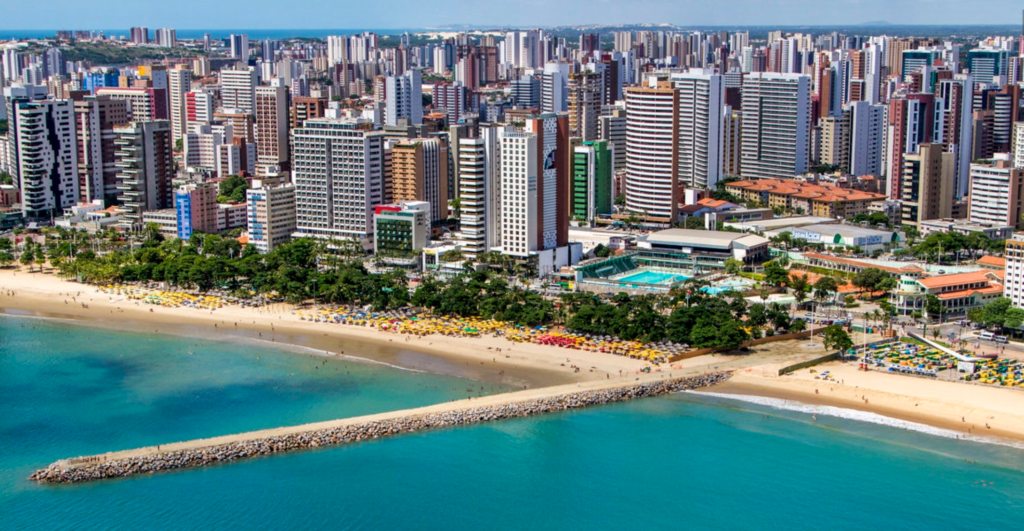
At first glance, Fortaleza is often associated with beaches, palm trees, and tropical vacations. And rightly so—the ocean is an essential part of everyday life here. But Fortaleza is much more than a beach destination. It is a metropolitan city of more than 2.4 million people, the capital of the state of Ceará, and one of the most important economic centers in northeastern Brazil.
How to Get to Fortaleza
For European travelers, one of Fortaleza’s biggest advantages is that it can be reached directly from two of Europe’s most convenient international hubs: Lisbon and Paris.
Via Lisbon – TAP Air Portugal or LATAM
The most straightforward route is:
Europe → Lisbon → Fortaleza
Direct flights between Lisbon and Fortaleza are currently operated by TAP Air Portugal (daily service) and LATAM. The flight takes approximately seven hours.
Via Paris – Direct with Air France
Another excellent option is:
Europe → Paris → Fortaleza
There is no need to connect through São Paulo or Rio de Janeiro. Air France operates direct flights between Paris Charles de Gaulle (CDG) and Fortaleza (FOR). The journey takes approximately 8 hours and 40 minutes, with several flights per week depending on the season.
An additional advantage is that the route operates in both directions, making it easy to spend a few days in Paris before continuing to Brazil. Air France currently offers round-trip fares between Fortaleza and Paris starting at around R$4,700, although prices naturally vary depending on travel dates and availability.
The key takeaway is simple: Fortaleza is far more accessible from Europe than many people realize. Instead of flying to São Paulo and spending several more hours on a domestic connection, travelers can simply fly to Lisbon or Paris and continue directly to Fortaleza.
What Is Fortaleza Like?
In short, Fortaleza is a large, tropical, lively, and sometimes chaotic city on the Atlantic coast.
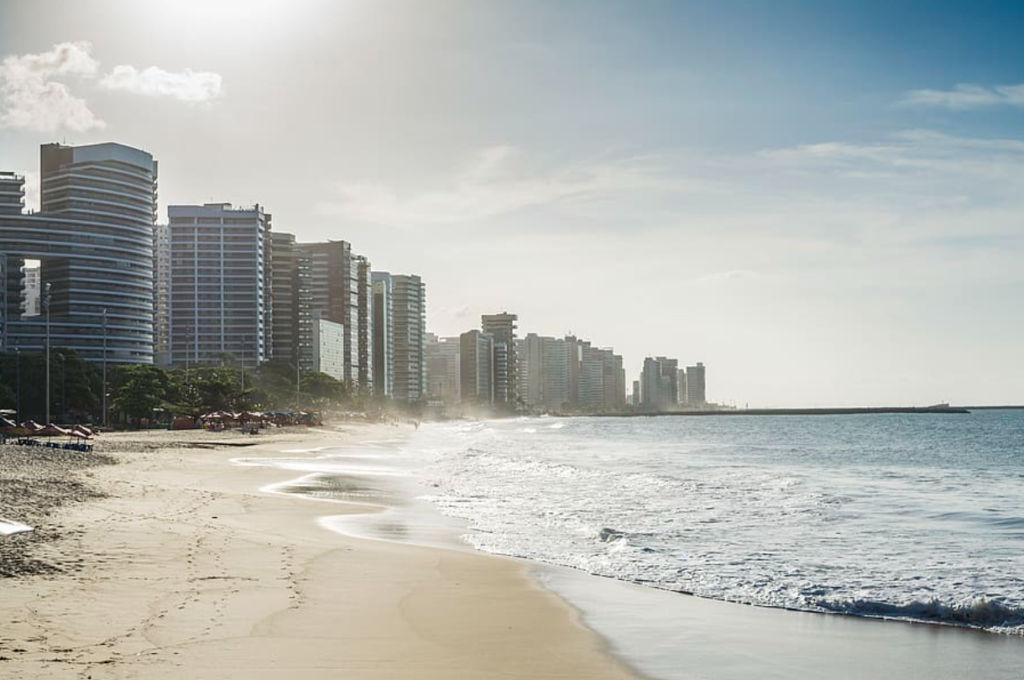
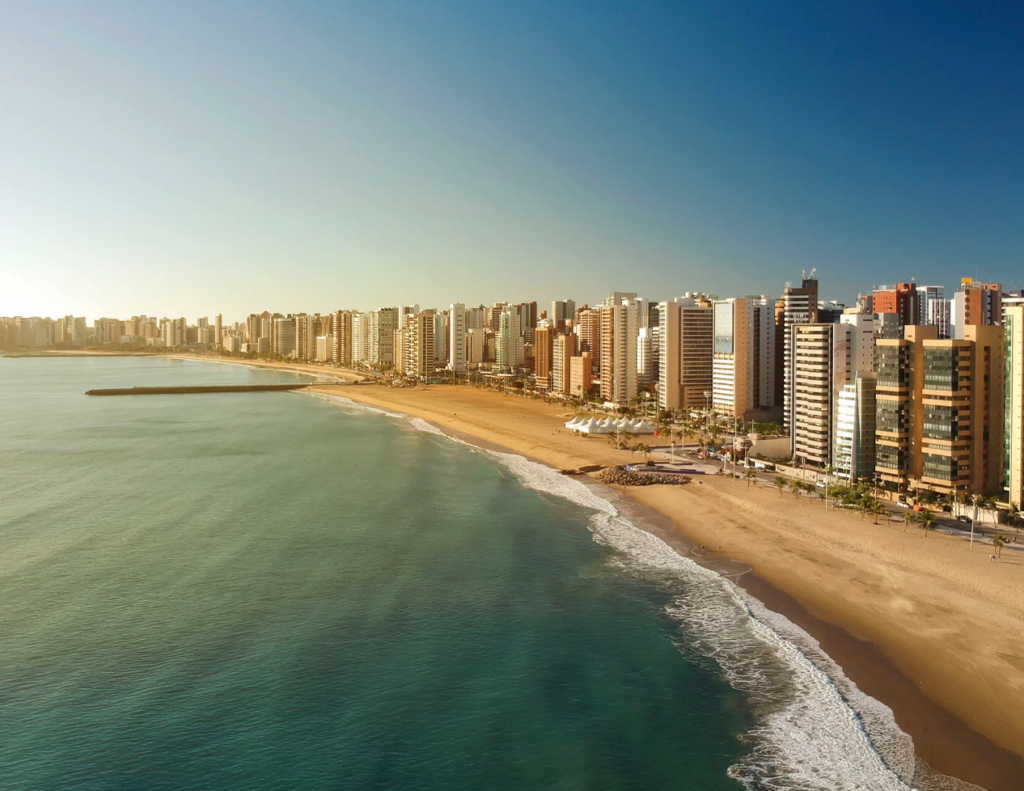
It should not be imagined as one giant beach resort or a small tourist town. It is a typical Brazilian metropolis with office towers, shopping malls, busy traffic, residential neighborhoods, lower-income districts, and luxury oceanfront apartment buildings.
The city’s best-known neighborhoods are located along the coastline. The most popular areas include Meireles, Mucuripe, Praia de Iracema, and Aldeota, where visitors will find hotels, restaurants, residential towers, shopping, and services catering to both locals and tourists.
Fortaleza enjoys a tropical climate throughout the year. While temperatures remain warm year-round, what surprises most Europeans is not the heat itself, but the absence of a traditional winter. This makes Fortaleza a destination that can comfortably be visited in any season.
What Drives the Local Economy?
Fortaleza is the economic center of Ceará and one of the leading commercial hubs in northeastern Brazil. Its economy is primarily based on services and commerce, while tourism also plays a significant role.
Tourism extends far beyond hotels and beaches. Visitor spending supports restaurants, transportation, retail, tour operators, entertainment businesses, and, naturally, the real estate sector.
Fortaleza is also an important administrative, commercial, and industrial center for the entire region. In other words, its economy is not dependent solely on international tourists coming to enjoy the beaches.
What About the Real Estate Market?
This is where things become particularly interesting.
Although Fortaleza remains more affordable than many of Brazil’s best-known metropolitan areas, quality apartments near the ocean are not necessarily inexpensive.
According to FipeZAP, the average asking rent for long-term residential properties in Fortaleza reached R$41.08 per square meter per month in June 2026, representing an annual increase of more than 14%. Short-term vacation rentals typically command significantly higher rates per square meter.
Prices vary considerably between neighborhoods, with prime oceanfront locations often exceeding the city average by a substantial margin.
To put this into perspective, a 50-square-meter apartment rented at the city’s average rate would cost approximately R$2,050 per month in rent alone. In premium beachfront locations, an apartment of similar size can cost considerably more.
It is also important to remember that in Brazil, rent is often only part of the monthly housing cost. Additional expenses may include the building maintenance fee (condomínio), annual property tax (IPTU), utilities, and other charges. For this reason, it is essential to look beyond the advertised monthly rent when comparing properties.
Are Apartments Expensive?
Compared with São Paulo or Rio de Janeiro, Fortaleza still offers many attractive buying opportunities. However, the city’s most desirable neighborhoods continue to appreciate in value.
According to FipeZAP, the average asking price for residential apartments in Fortaleza was approximately R$9,000 per square meter at the beginning of 2026. Based on this average, a 60-square-meter apartment would cost around R$540,000.
Of course, this is only a statistical average. An older apartment located far from the coastline is a completely different product from a modern condominium with a swimming pool, 24-hour security, and ocean views in neighborhoods such as Meireles or Mucuripe.
This geographical diversity is one of the defining characteristics of Fortaleza’s property market.
Is Renting Better Than Buying?
For most foreigners, renting first is generally the wiser decision.
Living in the city for several months allows newcomers to understand which neighborhood best matches their lifestyle. This is particularly important in Fortaleza, where two areas located only a few kilometers apart can offer completely different living experiences.
Those who value restaurants, beaches, shopping, and premium urban infrastructure typically choose neighborhoods such as Meireles, Mucuripe, or Aldeota. Buyers and renters looking for lower prices can find more affordable options farther away from the city’s most prestigious coastal districts.
Is Fortaleza a Good Place to Live?
Absolutely.
Its greatest advantages are undoubtedly the climate, the ocean, and the relaxed lifestyle. Residents enjoy all the conveniences of a large city while remaining only minutes away from beautiful beaches. Fortaleza also offers an extensive selection of restaurants, shopping centers, services, healthcare facilities, and entertainment.
Fortaleza in One Sentence
Fortaleza is not a sleepy beach town or a retirement destination. It is a vibrant, fast-growing, and sometimes chaotic metropolitan city with a beautiful coastline, a diversified economy, a strong service sector, a thriving tourism industry, and an increasingly valuable real estate market.
For many Europeans, the biggest surprise is that it is still possible to enjoy year-round warm weather and live close to the ocean at a cost that remains competitive by international standards. At the same time, it quickly becomes clear that Fortaleza is no longer “cheap Brazil”—especially for those seeking modern apartments in the city’s most desirable beachfront neighborhoods.
Fortaleza to jedno z tych brazylijskich miast, które na pierwszy rzut oka kojarzą się przede wszystkim z plażą, palmami i wakacjami. I rzeczywiście, ocean jest tutaj ważną częścią codziennego życia. Ale Fortaleza to nie tylko kurort. To ponad 2,4-milionowa metropolia, stolica stanu Ceará i jedno z najważniejszych gospodarczo miast północno-wschodniej Brazylii.
Jak dolecieć do Fortalezy?
Dla Polaka Fortaleza jest o tyle ciekawa, że z Europy można dolecieć tutaj bezpośrednio z dwóch bardzo wygodnych hubów – Lizbony i Paryża.
Przez Lizbonę – TAP albo LATAM
Najbardziej oczywistym wariantem jest podróż przez Lizbonę:
Polska → Lizbona → Fortaleza.
Na trasie Lizbona–Fortaleza bezpośrednie loty oferują obecnie TAP Air Portugal (7 lotów tygodniowo) oraz LATAM. Lot trwa około 7 godzin.
Przez Paryż – bezpośrednio z Air France
Drugą bardzo dobrą opcją jest:
Polska → Paryż → Fortaleza.
I tutaj również nie trzeba kombinować z przesiadką w São Paulo czy Rio de Janeiro. Air France obsługuje bezpośrednią trasę Paryż Charles de Gaulle (CDG) – Fortaleza (FOR). Lot trwa około 8 godzin i 40 minut. Aktualny rozkład przewiduje kilka lotów tygodniowo, zależnie od okresu.
Co ważne, połączenie działa w obie strony, więc można na przykład zrobić sobie kilkudniowy pobyt w Paryżu i dopiero później polecieć do Brazylii. Air France pokazuje obecnie bilety w obie strony na trasie Fortaleza–Paryż od około R$ 4.700, choć ceny oczywiście zmieniają się w zależności od terminu i dostępności.
Dlatego najważniejsza informacja jest taka: Fortaleza jest znacznie łatwiej dostępna z Europy, niż mogłoby się wydawać. Nie trzeba lecieć do São Paulo i potem spędzać kolejnych kilku godzin w samolocie. Można dolecieć do Lizbony albo Paryża, a stamtąd wsiąść w bezpośredni lot do Fortalezy.
Jaka jest Fortaleza?
Najprościej mówiąc: duże, tropikalne, chaotyczne, ale bardzo żywe miasto nad oceanem.
Nie należy wyobrażać sobie Fortalezy jako jednego wielkiego kurortu w rodzaju małej miejscowości turystycznej. To normalna brazylijska metropolia z biurowcami, centrami handlowymi, korkami, osiedlami mieszkaniowymi, biedniejszymi dzielnicami i bardzo drogimi apartamentami nad oceanem.
Najbardziej znane części miasta znajdują się w pobliżu wybrzeża. Szczególnie kojarzone z turystyką są Meireles, Mucuripe, Praia de Iracema i Aldeota. To właśnie tam znajdziemy wiele hoteli, restauracji, apartamentowców, sklepów i usług skierowanych zarówno do mieszkańców, jak i turystów.
Fortaleza ma typowy klimat tropikalny. Przez cały rok jest ciepło, a dla Europejczyka największą różnicą nie jest nawet sama temperatura, lecz brak klasycznej zimy. Nie trzeba więc myśleć o mieście jako o miejscu, do którego jedzie się wyłącznie w lipcu czy sierpniu.
Z czego żyje miasto?
Fortaleza jest gospodarczym centrum Ceará i jednym z najważniejszych ośrodków północno-wschodniej Brazylii. Gospodarka miasta opiera się przede wszystkim na usługach i handlu, a znaczącą rolę odgrywa również turystyka.
Turystyka jest tutaj czymś więcej niż hotelami i plażą. Pieniądze turystów trafiają do restauracji, transportu, sklepów, firm organizujących wycieczki, branży rozrywkowej i oczywiście nieruchomości.
Fortaleza jest też ważnym centrum administracyjnym, handlowym i przemysłowym całego regionu. Innymi słowy, nie jest to miasto, którego gospodarka opiera się wyłącznie na tym, że Europejczycy przyjeżdżają tutaj opalać się na plaży.
A co z nieruchomościami?
Tu robi się ciekawie.
Fortaleza jest tańsza od wielu najbardziej znanych brazylijskich metropolii, ale dobre mieszkanie blisko oceanu wcale nie musi być tanie.
Według FipeZAP średnia cena ofertowa najmu mieszkania w Fortalezie w czerwcu 2026 roku wynosiła 41,08 R$ za m² miesięcznie, przy dlugoterminowym najmie. W ciągu roku ceny najmu wzrosły o ponad 14%. W przypadku nieruchomosci wakacyjnych cena za m² jest o wiele wyższa.
Różnice pomiędzy dzielnicami są jednak bardzo duże. W najlepszych lokalizacjach nad oceanem ceny potrafią być zdecydowanie wyższe od miejskiej średniej.
Dlatego można to przełożyć na prosty przykład: 50-metrowe mieszkanie przy średniej miejskiej stawce oznaczałoby około 2 050 R$ miesięcznie samego czynszu. W lepszej lokalizacji, np. przy oceanie, podobne mieszkanie może kosztować zdecydowanie więcej.
I trzeba uważać na jedną rzecz: w Brazylii do czynszu mogą dochodzić dodatkowe koszty, np. opłata za utrzymanie części wspólnych budynku (condomínio), podatek od nieruchomości (IPTU), media czy inne opłaty. Dlatego przy porównywaniu mieszkań nie należy patrzeć wyłącznie na kwotę podaną jako „aluguel”.
Czy mieszkania w Fortalezie są drogie?
Jeżeli porównamy Fortalezę z São Paulo czy Rio de Janeiro, można znaleźć tutaj sporo atrakcyjnych cenowo nieruchomości. Z drugiej strony najlepsze lokalizacje są coraz droższe.
Według FipeZAP średnia cena ofertowa sprzedaży mieszkań w Fortalezie wynosiła na początku 2026 roku około 9 tys. R$ za m². To oznacza, że mieszkanie o powierzchni 60 m² przy miejskiej średniej kosztowałoby orientacyjnie około 540 tys. R$.
Ale jest to tylko matematyczna średnia. Apartament w starszym budynku, daleko od oceanu, będzie zupełnie innym produktem niż nowoczesne mieszkanie z basenem, ochroną i widokiem na ocean w Meireles czy Mucuripe.
I właśnie to jest charakterystyczne dla Fortalezy: rynek nieruchomości jest mocno zróżnicowany lokalizacyjnie.
Czy warto wynajmować mieszkanie?
Dla osoby przyjeżdżającej z zagranicy wynajem jest zazwyczaj znacznie rozsądniejszy niż kupowanie mieszkania od razu.
Najpierw warto pomieszkać w mieście kilka miesięcy i zobaczyć, która dzielnica faktycznie nam odpowiada. To szczególnie ważne w Fortalezie, ponieważ dwie lokalizacje oddalone od siebie o kilka kilometrów mogą oferować zupełnie inne doświadczenie życia.
Jeżeli ktoś chce mieszkać blisko restauracji, morza, sklepów i infrastruktury dla bardziej zamożnych mieszkańców, naturalnym punktem wyjścia są Meireles, Mucuripe czy Aldeota. Jeżeli najważniejsza jest cena, można szukać dalej od najbardziej prestiżowych części wybrzeża.
Czy Fortaleza jest dobrym miejscem do życia?
TAK! Największą zaletą jest oczywiście klimat, ocean i styl życia. Można mieć normalne, wielkomiejskie życie, a jednocześnie być kilka minut od plaży. Miasto ma dużą bazę restauracji, sklepów, usług i rozrywki.
Fortaleza w jednym zdaniu
Fortaleza to nie jest brazylijska wersja nadmorskiego miasteczka dla emerytów. To wielka, żywa i momentami chaotyczna metropolia, która ma piękne wybrzeże, rozwijającą się gospodarkę, mocny sektor usług i turystyki oraz coraz droższy rynek mieszkaniowy.
Dla Europejczyka największym zaskoczeniem może być to, że za relatywnie niewielkie pieniądze można tutaj znaleźć mieszkanie w bardzo ciepłym klimacie, niedaleko oceanu. Ale równie szybko można dojść do wniosku, że Fortaleza nie jest już „tanią Brazylią”, szczególnie jeśli ktoś chce mieszkać w najlepszych dzielnicach, w nowoczesnym apartamentowcu i blisko morza.
Thinking About Investing in Fortaleza?
Whether you’re looking for a vacation home, a rental property, or a long-term investment, understanding the local market is essential. Every neighborhood offers different opportunities, and choosing the right location can make a significant difference in both lifestyle and returns.
If you’re considering buying property in Fortaleza or anywhere in northeastern Brazil, I’d be happy to help you navigate the market, evaluate opportunities, and make an informed investment decision.